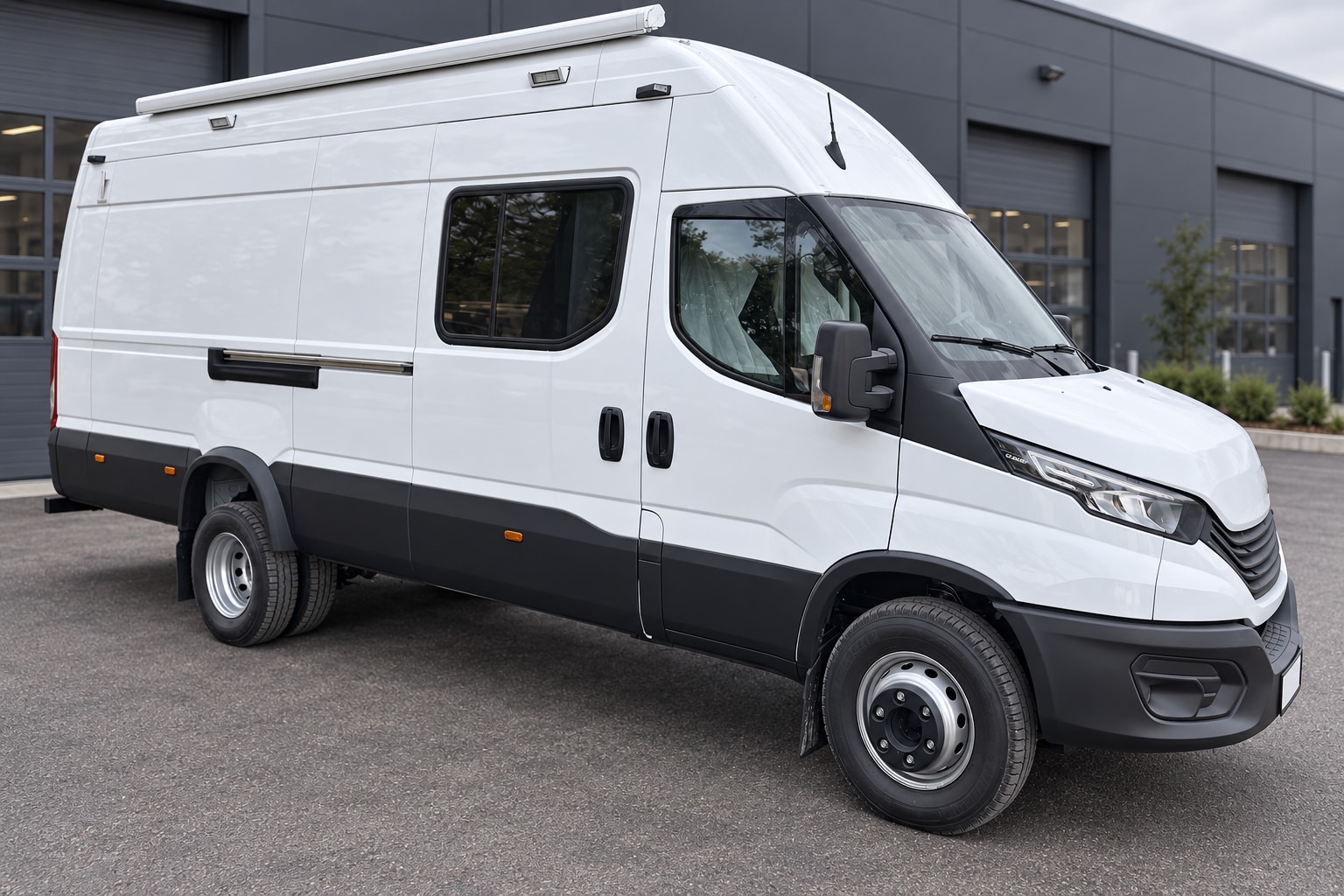
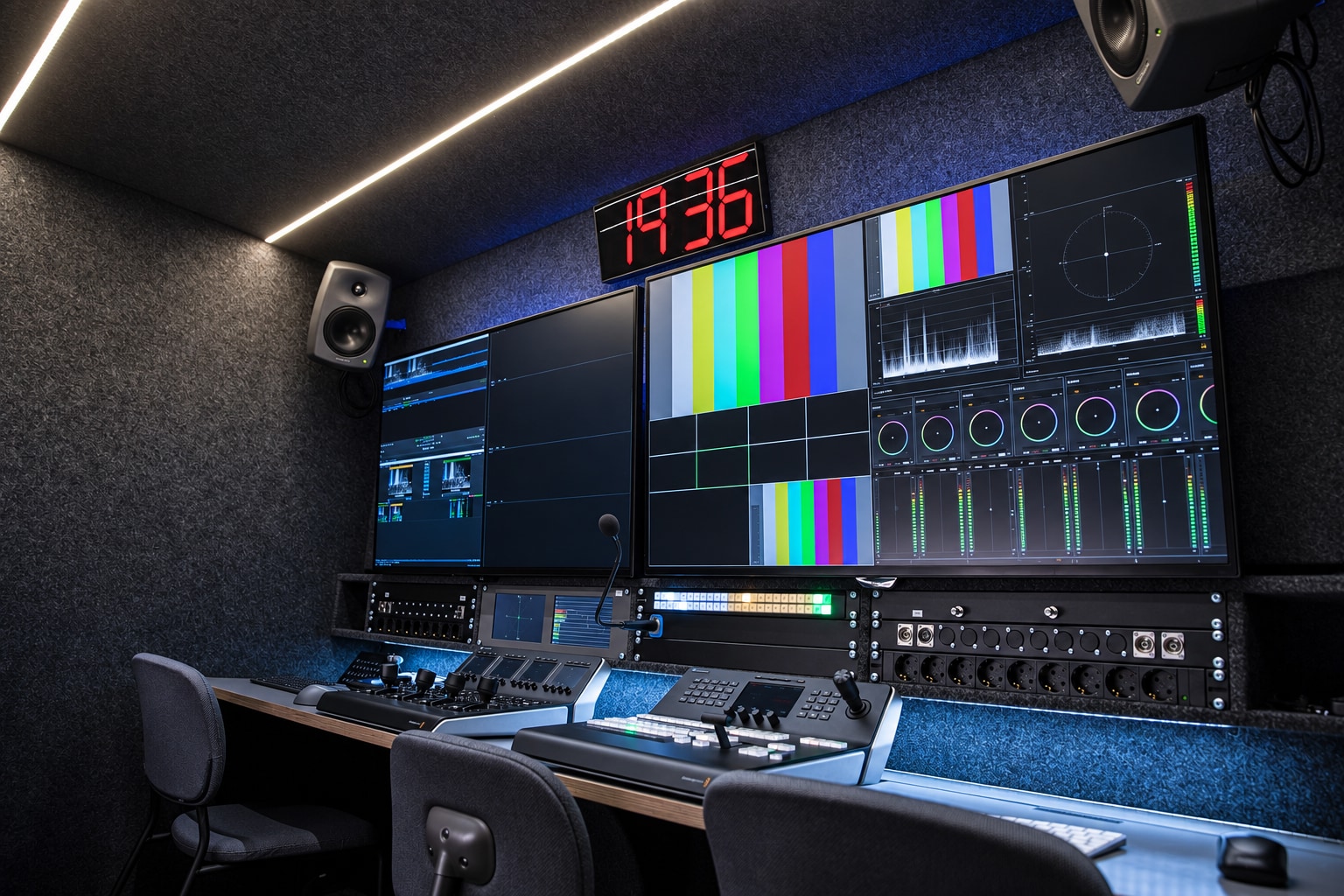
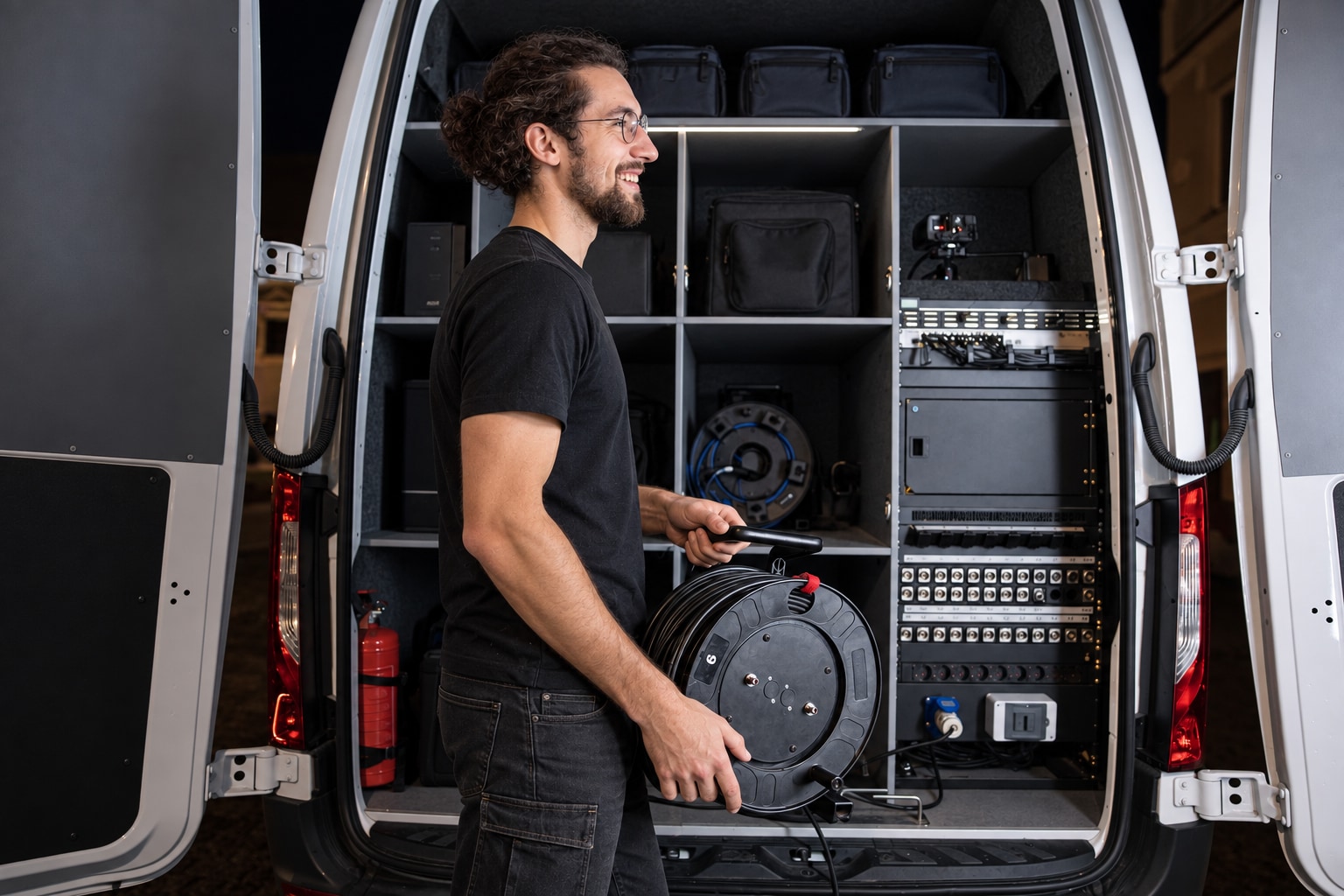
OB vans and mobile production systems
Vehicle build-outs, coachbuilding, racks, operator positions, cooling, routing, mobile control, and field-ready production environments.


We build OB vans, studios, control rooms, rack systems, cabling infrastructure, and mobile broadcast solutions for clients in Lithuania and worldwide.
Broadcast Solutions operates as a reliable technical partner: practical, technically strong, and equally at home in workshop bays, control rooms, studio grids, service tunnels, and mobile units full of racks and cabling. We help clients who need more than equipment. They need a system that works as a whole.
We support both demanding broadcast projects and more straightforward setups. The scale changes. The engineering mindset does not.
Vehicle build-outs, coachbuilding, racks, operator positions, cooling, routing, mobile control, and field-ready production environments.
Studio design, camera chains, teleprompters, robotics, acoustic control, lighting, and the operator logic behind a studio that is genuinely usable.
Server rooms, rack engineering, post-production, signal distribution, venue cabling, and support systems that keep production stable.
A working OB van starts with a well-planned layout. We plan operator positions, rack space, cable routes, cooling, and service access before the build begins.
Using 3D layouts and detailed drawings, we work through the practical details with you, then carry the agreed design into coachbuilding and systems integration.
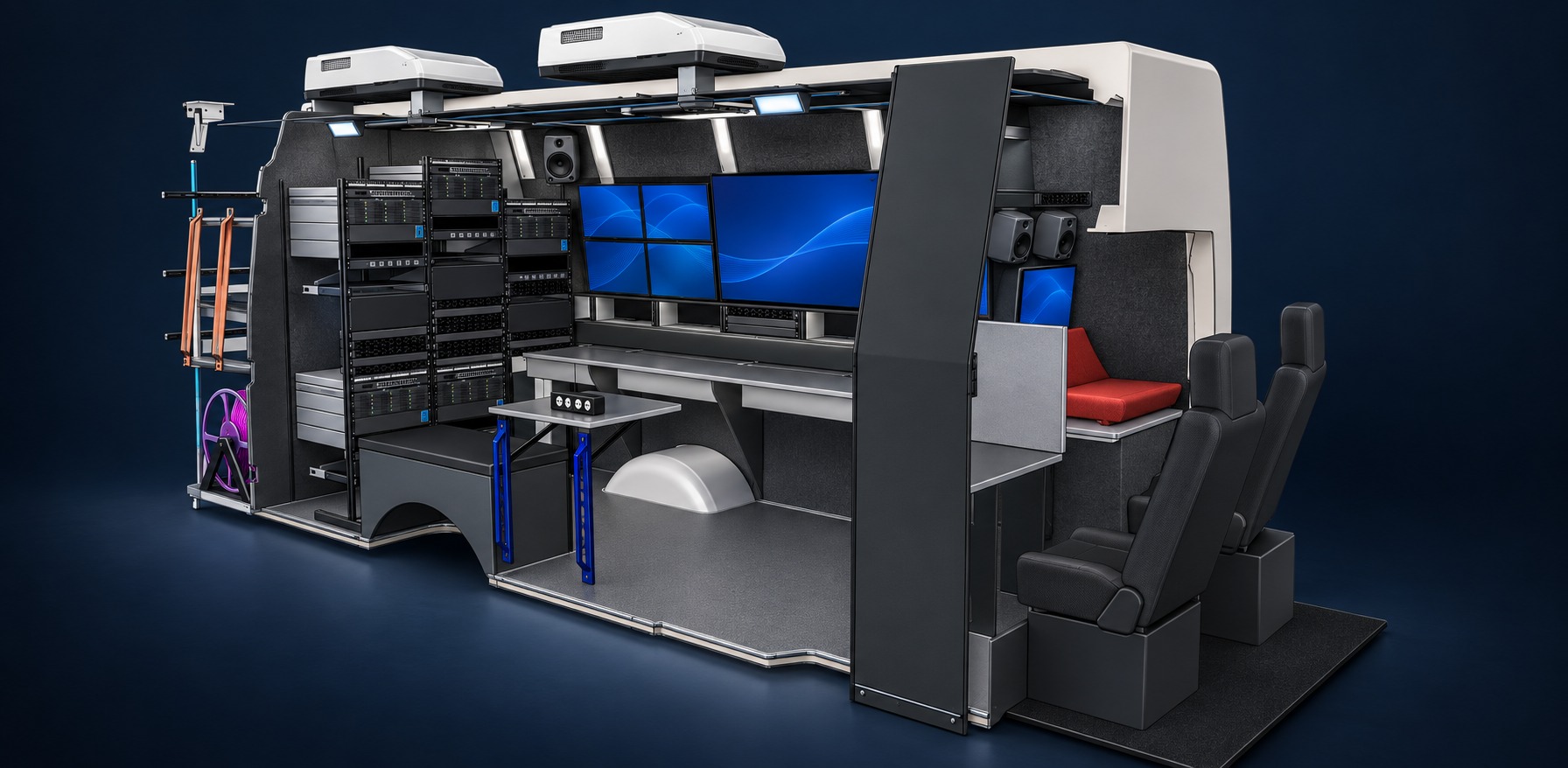
Operator desks, monitor walls, equipment racks, and cooling brought together in one vehicle layout.
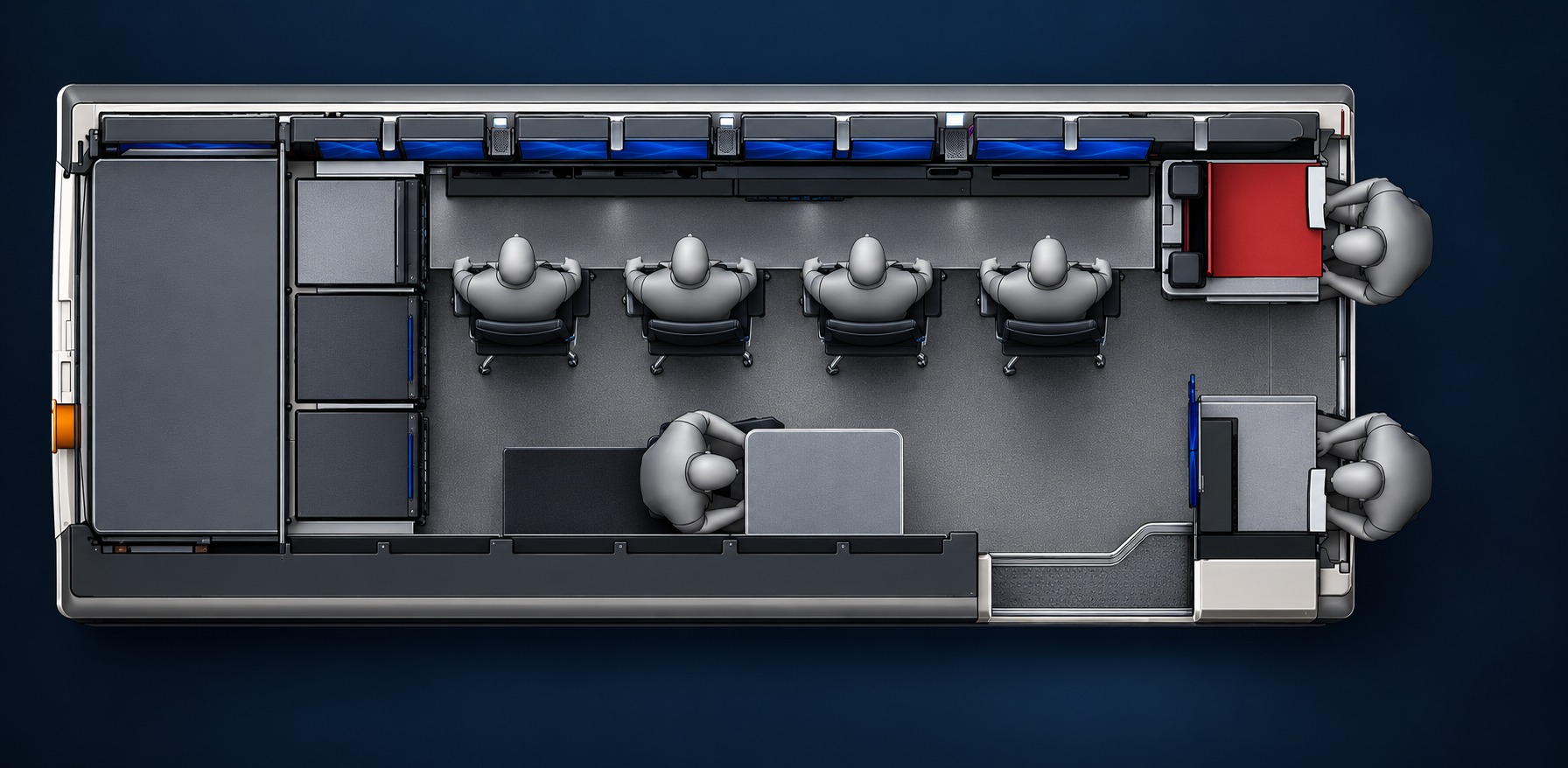
A top-down study of operator positions, sightlines, circulation, and access to equipment.
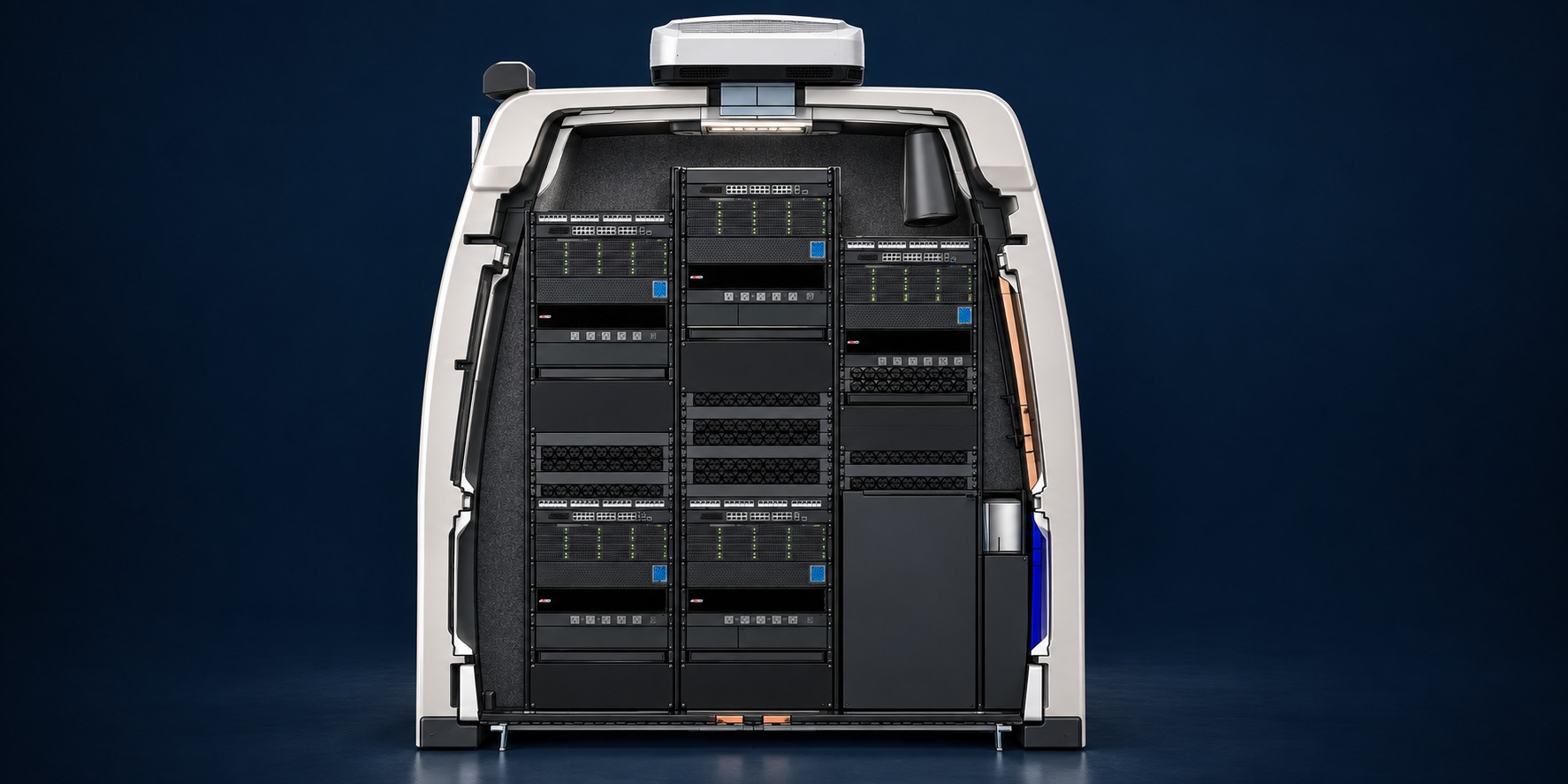
Rack arrangement developed around the vehicle envelope, equipment layout, and maintenance needs.
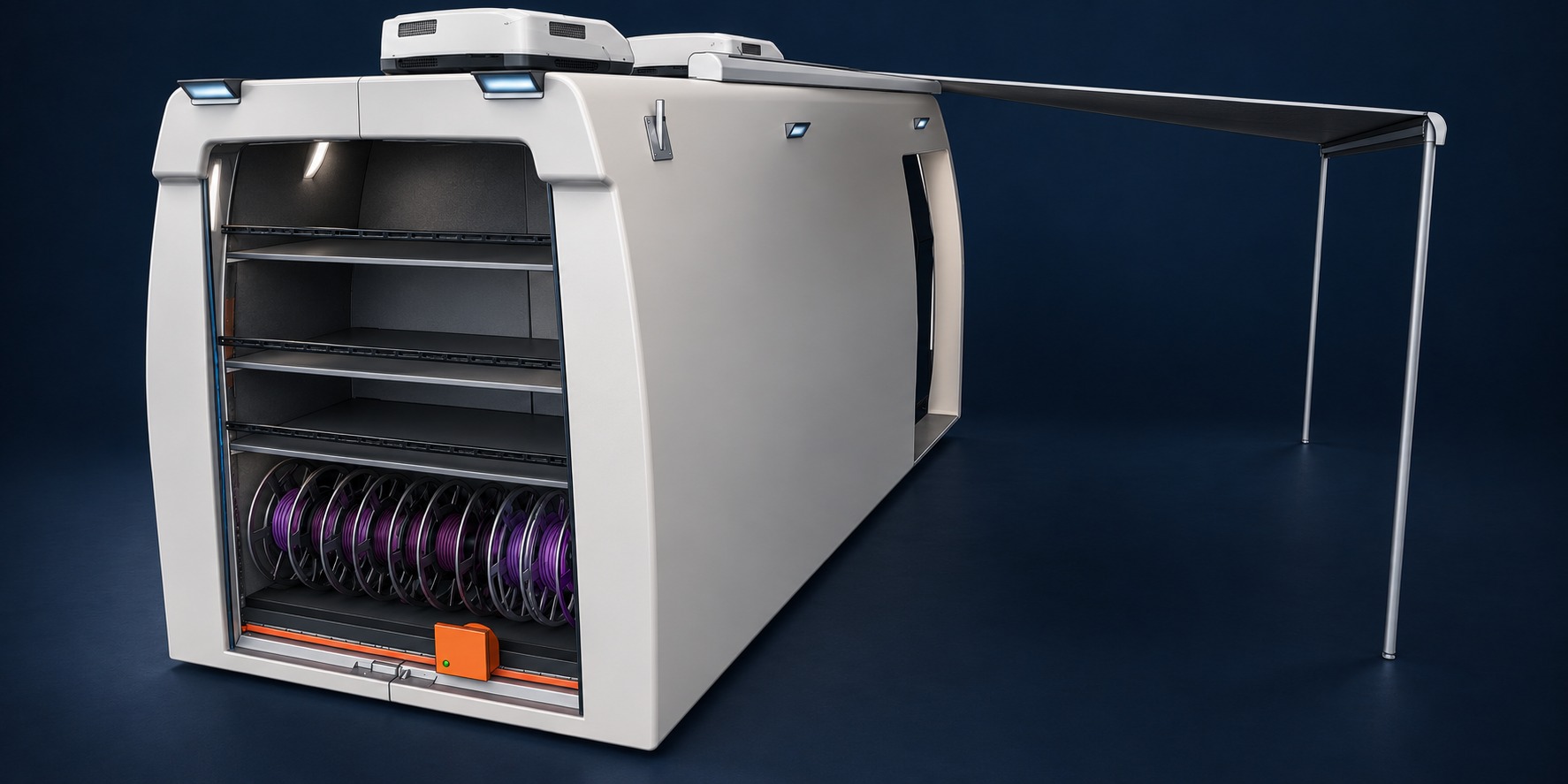
Rear storage, cable reel positioning, and sheltered access considered alongside the production space.
IVECO Daily OB van design study. AI-assisted concept renders based on project drawings; not construction documentation. Final details subject to engineering review.
View original layout drawing ↗Have a vehicle in mind, or starting from a blank sheet?
Discuss Your OB VanThe right OB van starts with the right base vehicle. Length, roof height and weight rating need to work together. We help you compare the options before you commit to a purchase.
A shorter body can suit a compact production setup. A longer body gives more room for several operators, a separate audio area, equipment racks and cable storage.
Start with the layout: allow for working positions, chair movement, clear access and maintenance space. Then check wheelbase, rear overhang and overall length against the places you need to drive and park.
A higher roof can make room for standing headroom and taller installations. But the bare van's interior height is not the height you will have after conversion.
Count the complete build-up: flooring, insulation, ceiling lining and cable routes take space. Check the finished external height too, including roof-mounted cooling and antennas, against doors, covered parking and site access.
Similar-looking vans can have different weight ratings and axle limits. Choose the variant from the complete loaded weight, not from the size of the empty body.
Include everything carried: the conversion, racks, equipment, power systems, cooling, cable drums, people and supplies. Check front and rear axle loads, leave a practical reserve, and compare heavier-duty variants when the weight calculation calls for them.
Send us your equipment list, crew size and the kind of productions you cover. We can help compare body lengths, roof heights, weight classes, doors and factory options, then work through the layout with you and the vehicle supplier. Already found a van? Send us its specification before you buy.
Compare actual dimensions and the exact vehicle specification, not just L/H labels. Available variants differ by manufacturer, model year and market. Final loaded mass, axle loads and applicable registration and operating requirements need to be checked for each build.
Manual reels, motorised winding or a mix of both. We plan your cable system around the productions you cover, the distances you need and the way your crew works on site, with Schill reel configurations selected to suit the build.
We supply SMPTE ST 311 hybrid fibre-optic camera cables, also commonly known as SMPTE 311M cables. They combine single-mode optical fibres with electrical conductors for power and control in one cable, connecting broadcast cameras to their camera control units.
Tell us your camera and CCU models, required lengths and connector requirements. We will help select the right cable specification and check reel compatibility.
Camera, fibre, audio, network and power cables have different handling requirements. We check the exact cable type, diameter, length, connector clearance and permitted bend radius before selecting the reels.
Reel space is more than drum diameter. The layout needs room for the drive, cable guides, connectors and maintenance, without blocking access to racks. Motorised systems also need a suitable power supply, controls and protection.
Cables, reels, mounting hardware and power equipment all add to the vehicle's mass. We include the complete system in weight planning and check its position against axle loads, not just the van's overall payload.
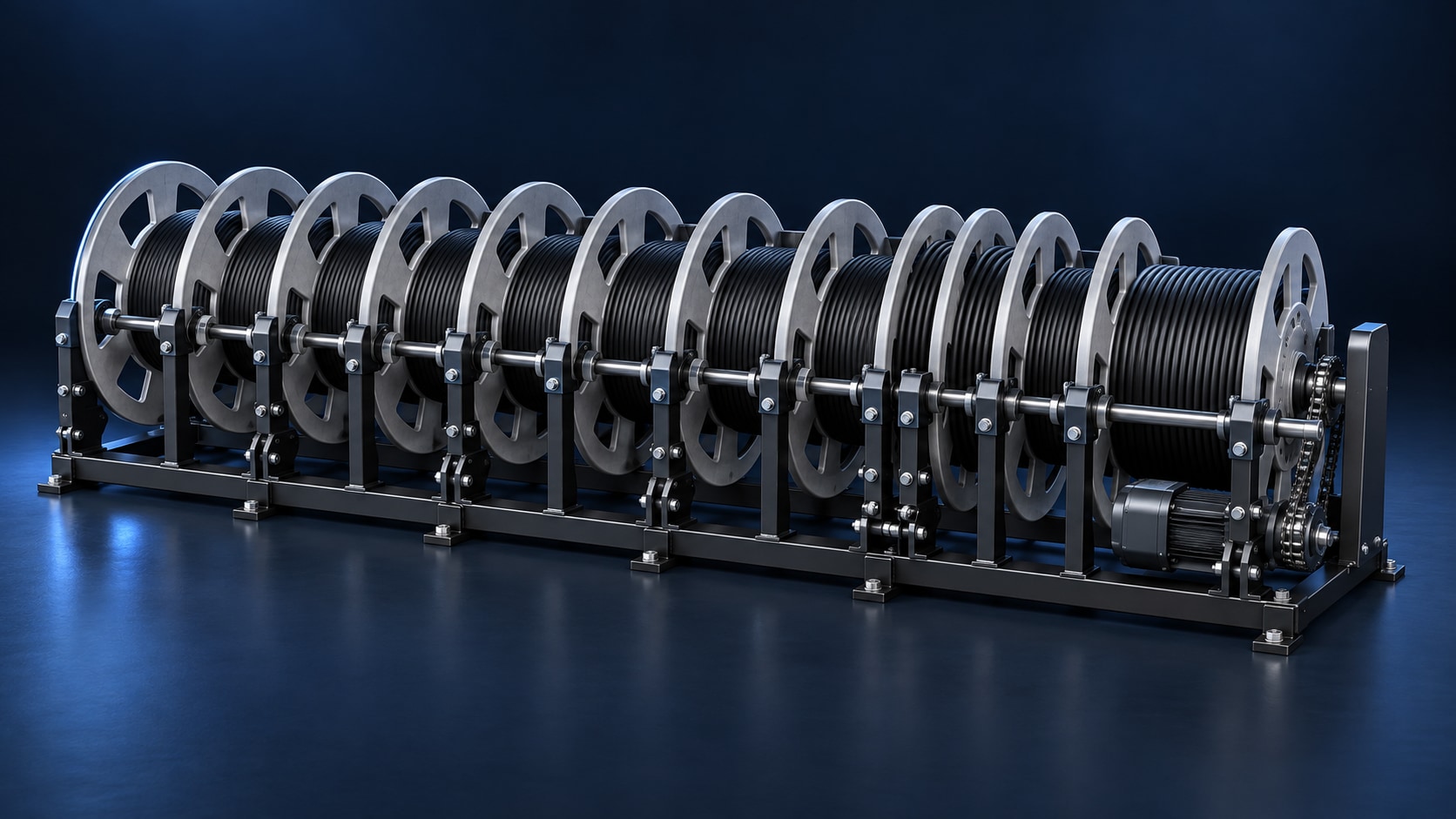
A custom MPL 10.600.200.50-120 configuration specified by Schill for Percon 0535TPU/PUR SMPTE 311 hybrid camera cable, diameter 9.2 mm. This is a planning example, not a standard package or a fit guarantee for every vehicle.
Six 200 m reels, two 100 m reels and two 300 m reels. Drawing dimensions: 1,855 mm wide × 710 mm deep × 610 mm high, before installation and service allowances. Cable, connectors and vehicle mounting equipment add to the quoted unit mass.
Source: Schill technical proposal dated 30 March 2026 and manufacturer weight confirmation dated 11 May 2026. Final specifications are confirmed with the manufacturer for each order.
Tell us which cables you carry and how far they need to reach.
Plan Your Cable SystemExplore exterior directions for Mercedes-Benz Sprinter and IVECO Daily builds. We work through the vehicle, layout and finish around your production needs.
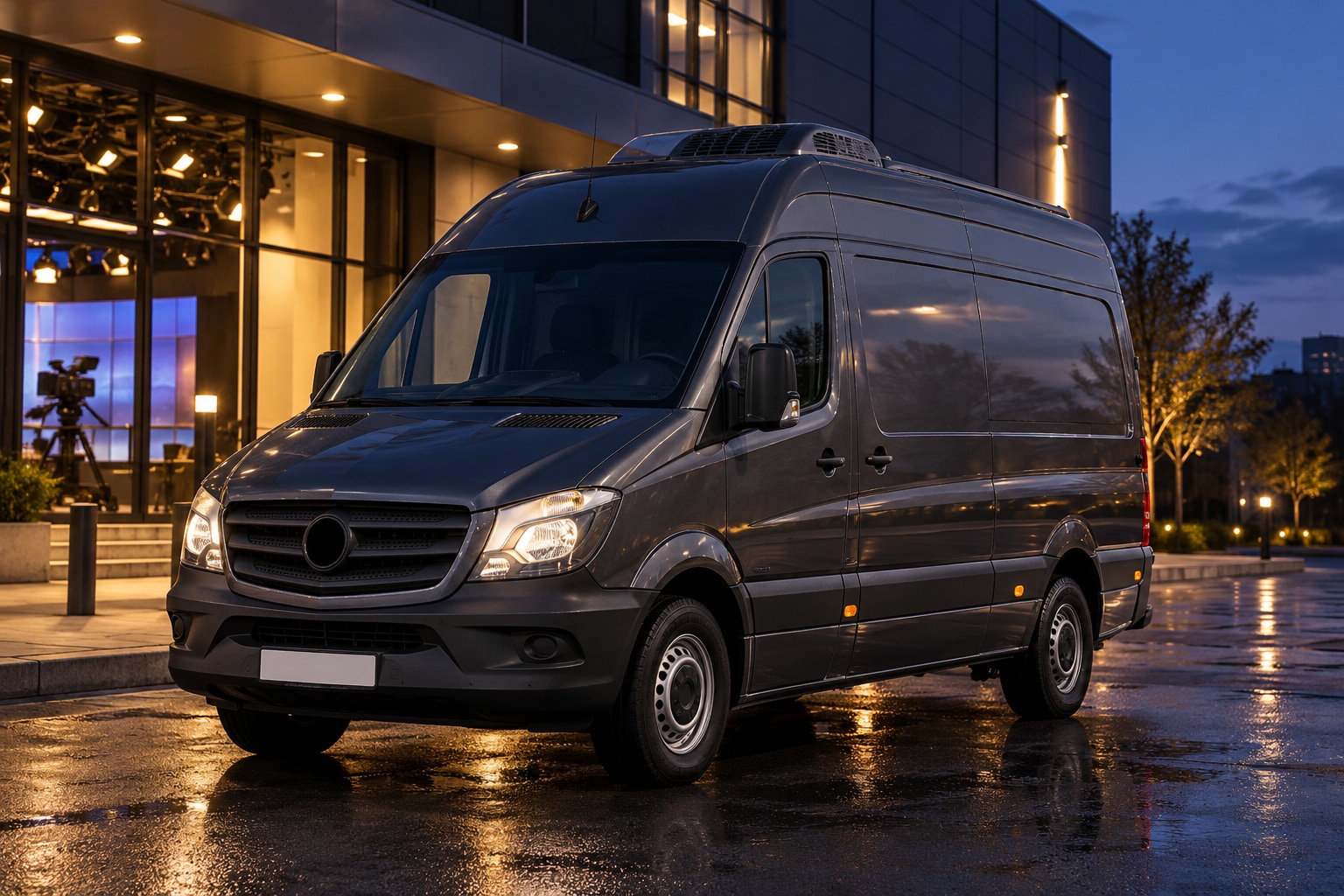
Graphite finish
A restrained dark finish for a mobile production workspace.
Layout, equipment and final specification are developed for each project.
Discuss your vehicle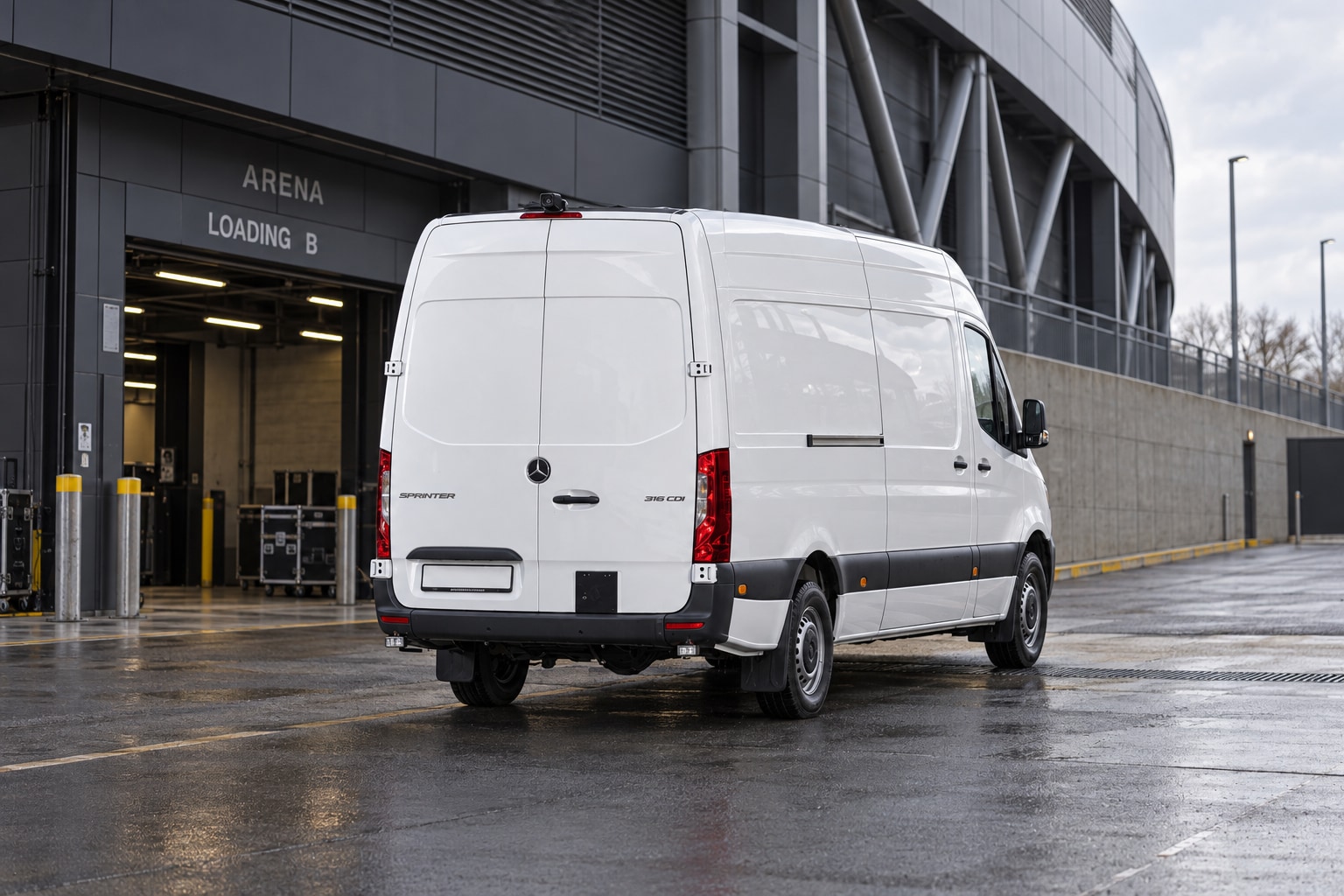
White finish
A clean, practical exterior with room for your own visual identity.
Layout, equipment and final specification are developed for each project.
Discuss your vehicle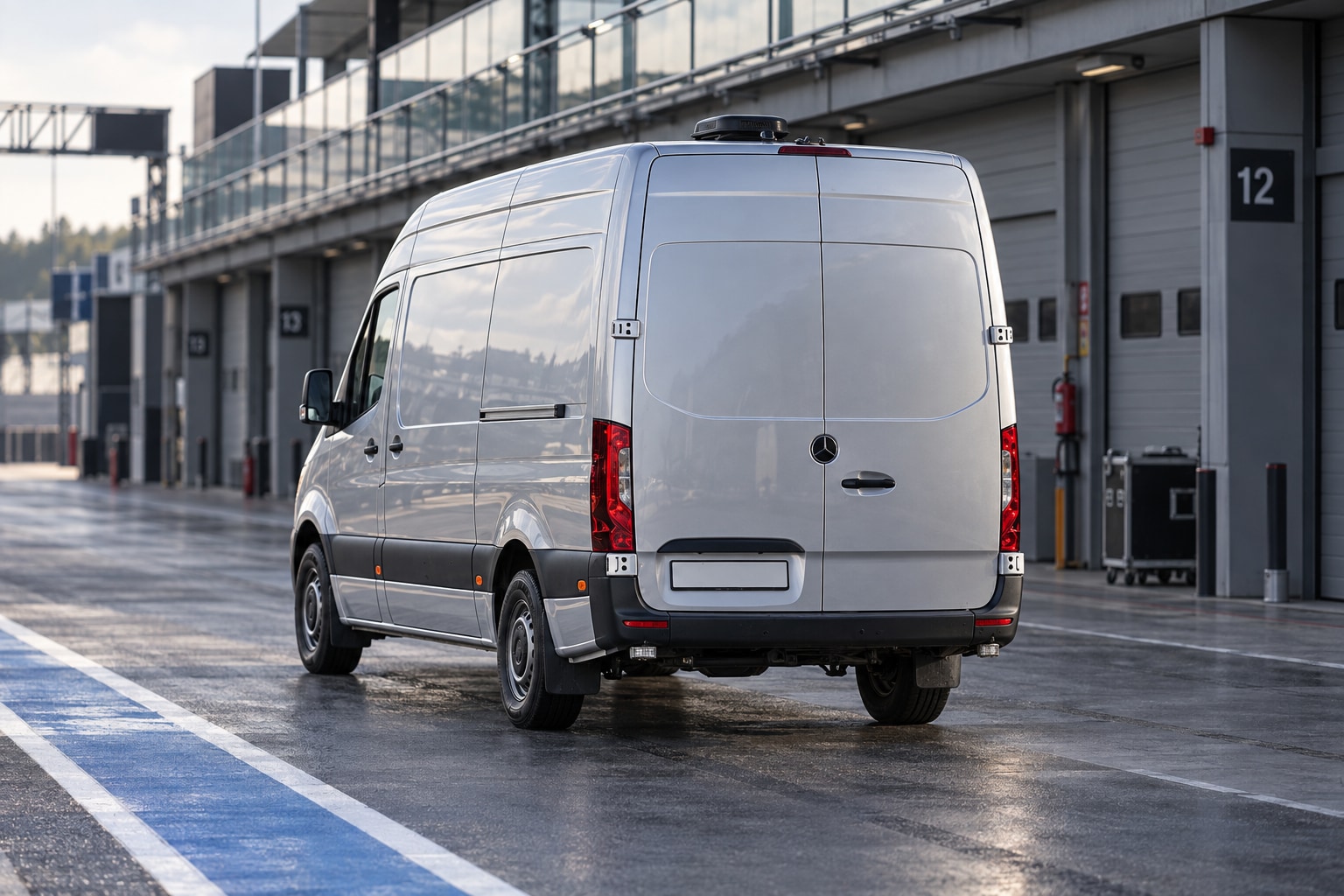
Silver finish
A neutral metallic finish with a straightforward technical character.
Layout, equipment and final specification are developed for each project.
Discuss your vehicle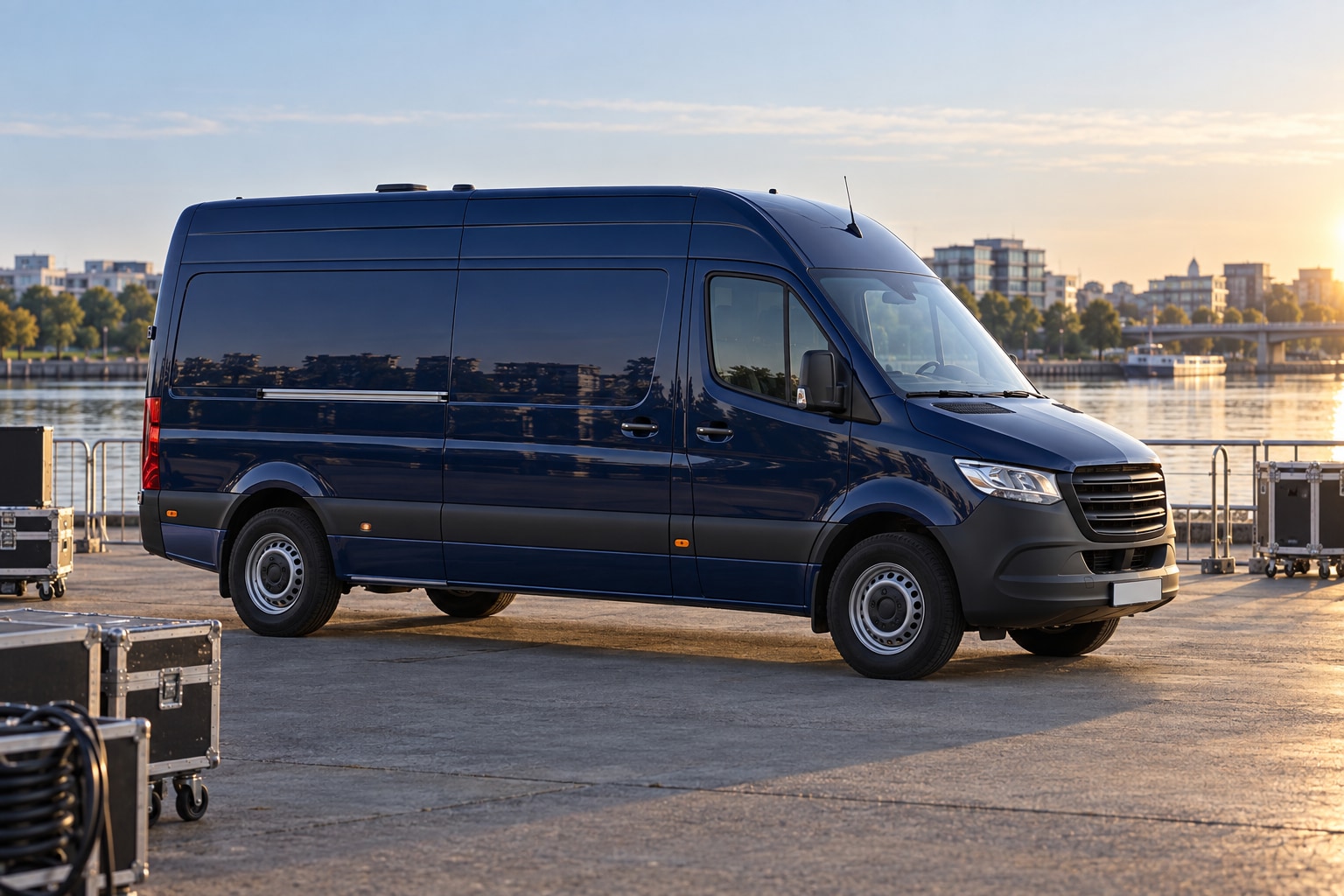
Navy finish
A deeper colour direction for an understated exterior.
Layout, equipment and final specification are developed for each project.
Discuss your vehicle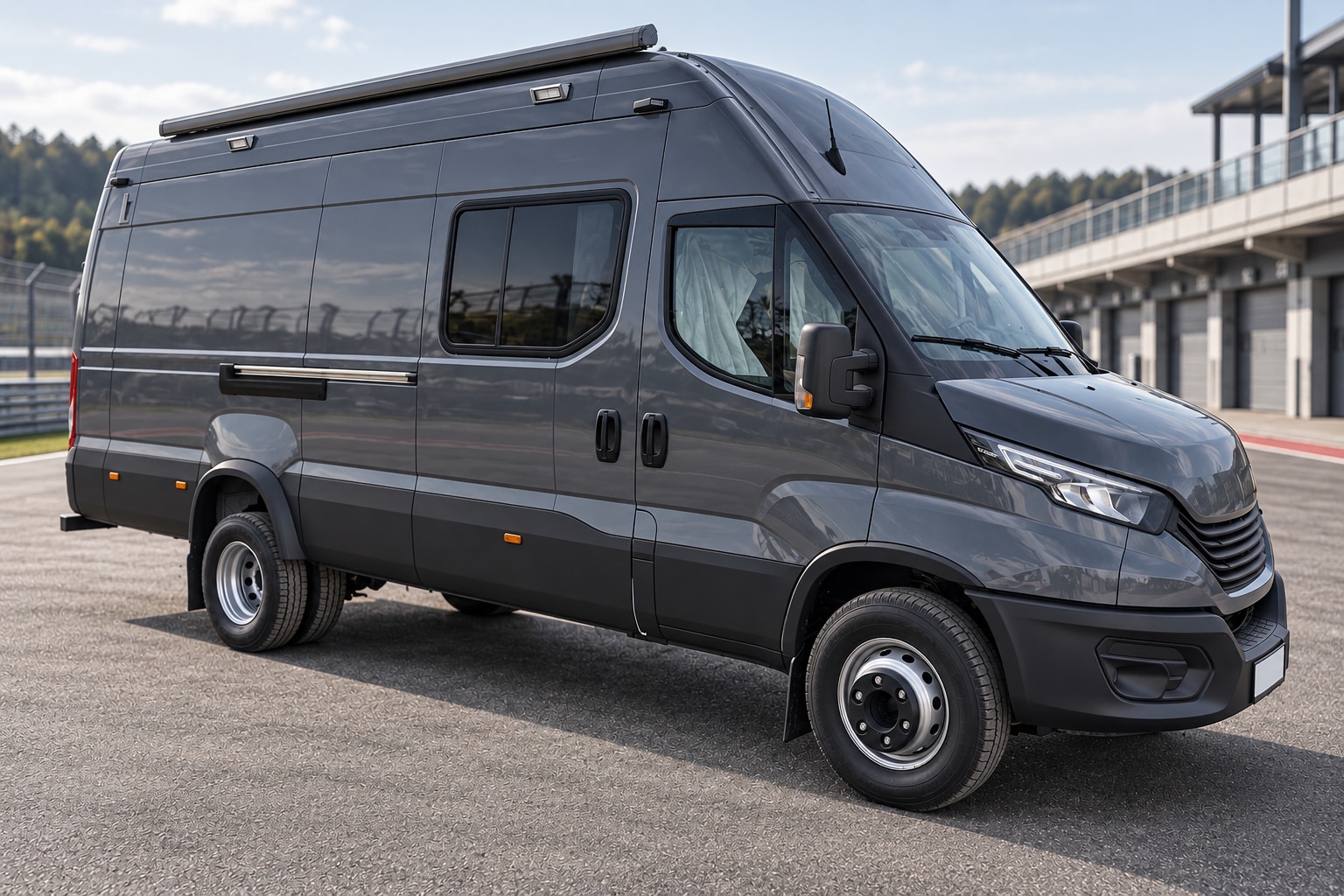
Graphite finish
A high-roof vehicle direction for a purpose-built production interior.
Layout, equipment and final specification are developed for each project.
Discuss your vehicleSee what goes into the vehicle, from the work behind the panels to the spaces used on production day.
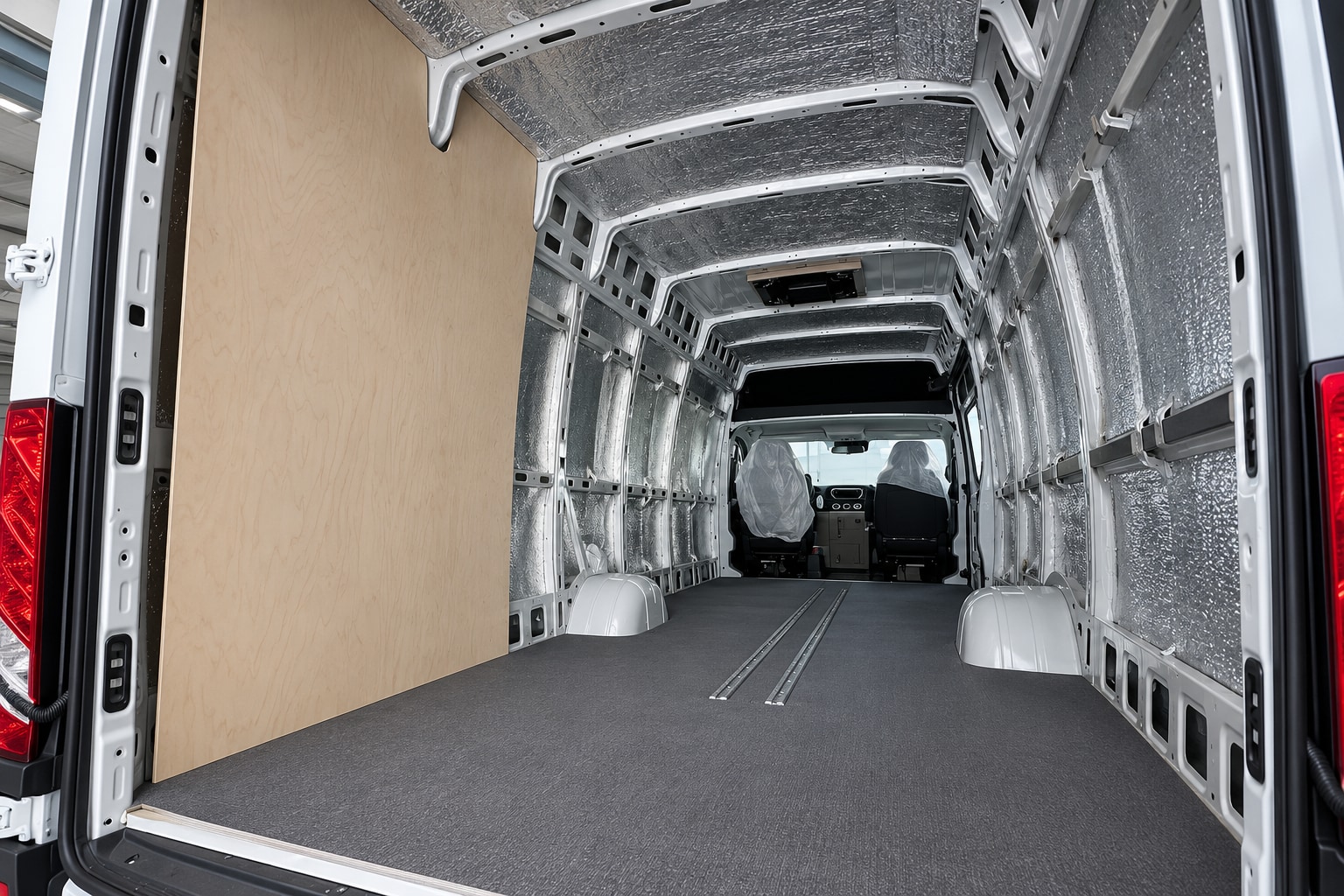
Insulation, flooring and the foundations of the interior.
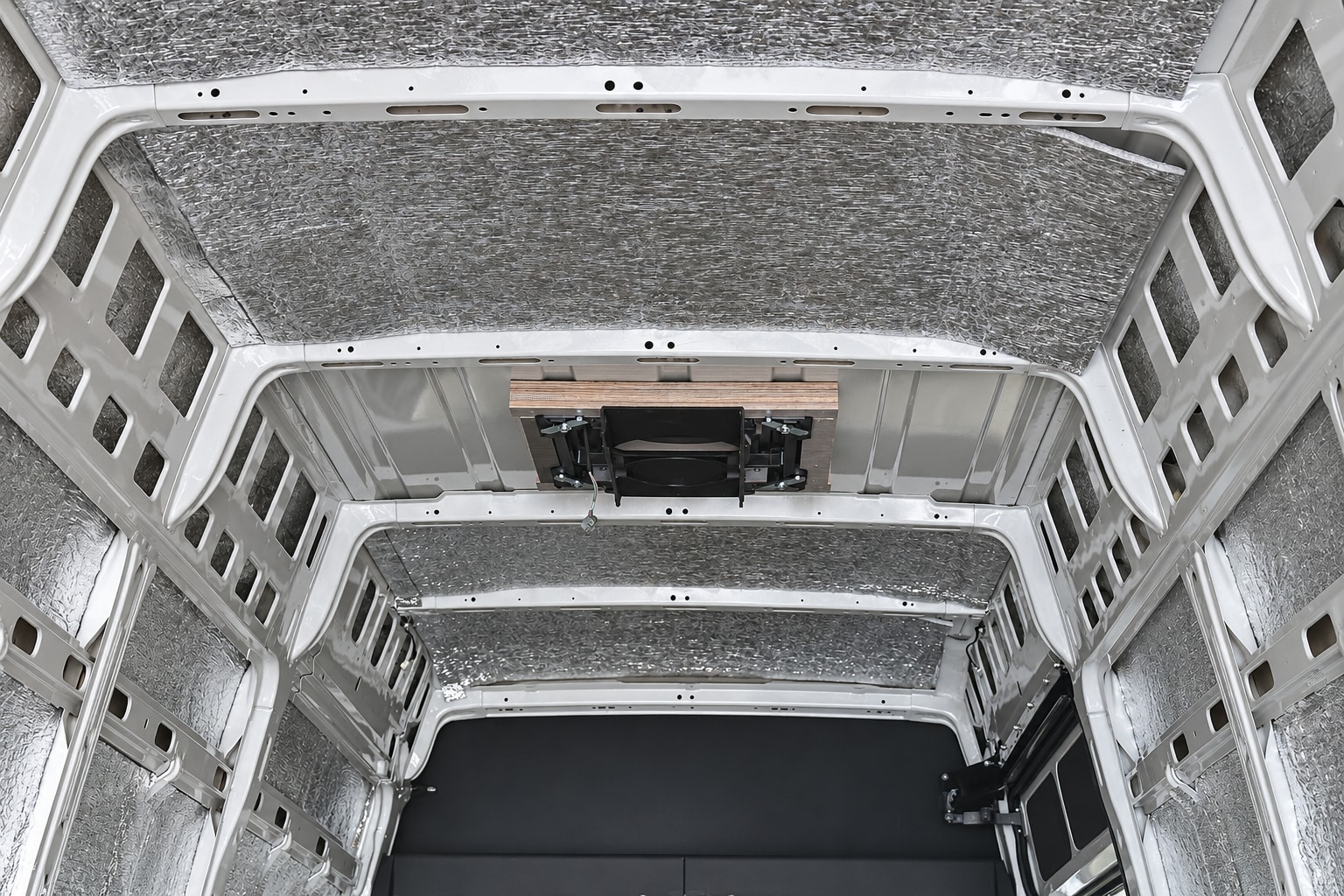
Roof structure and insulation before the interior is closed up.
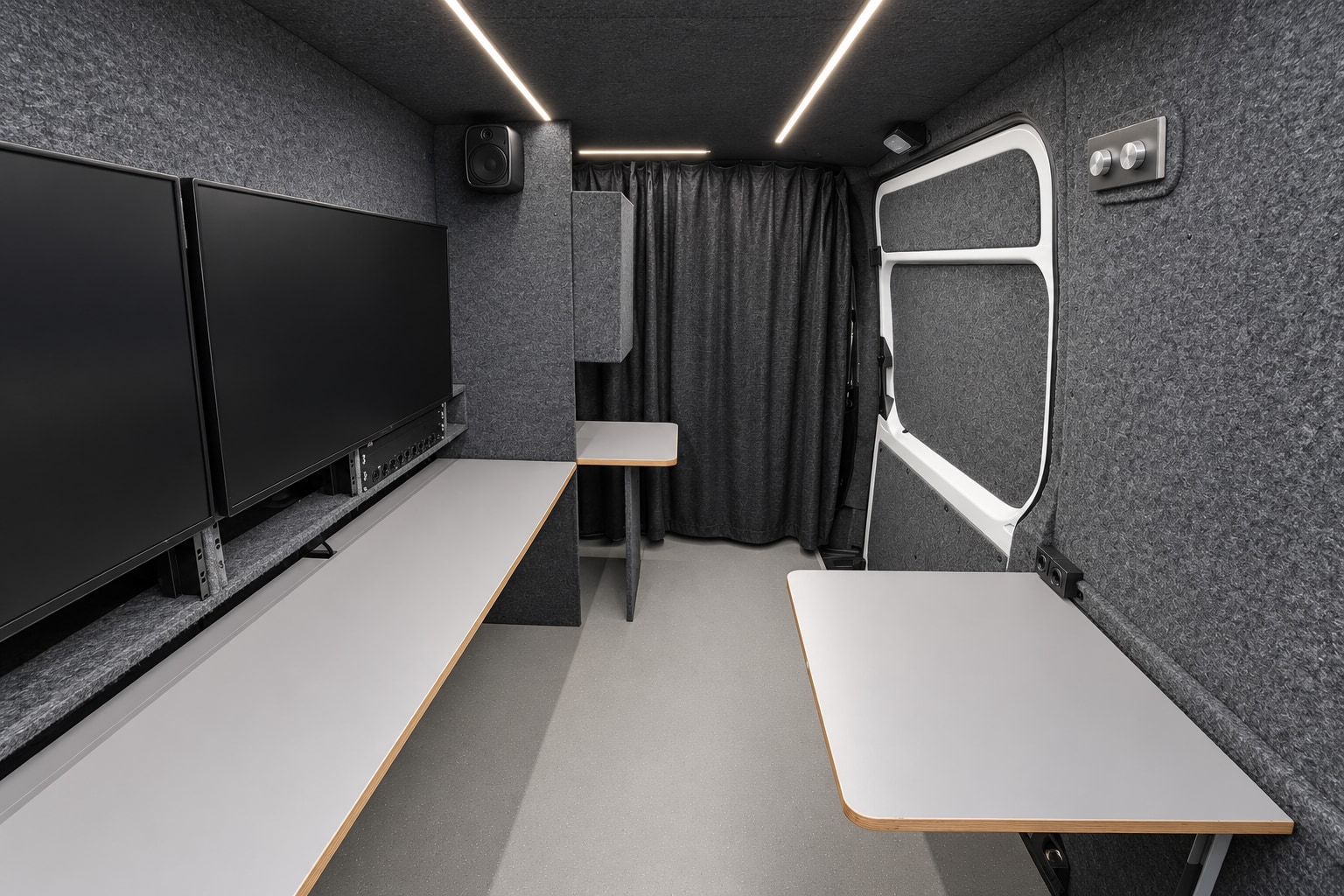
Work surfaces, acoustic lining and usable space.
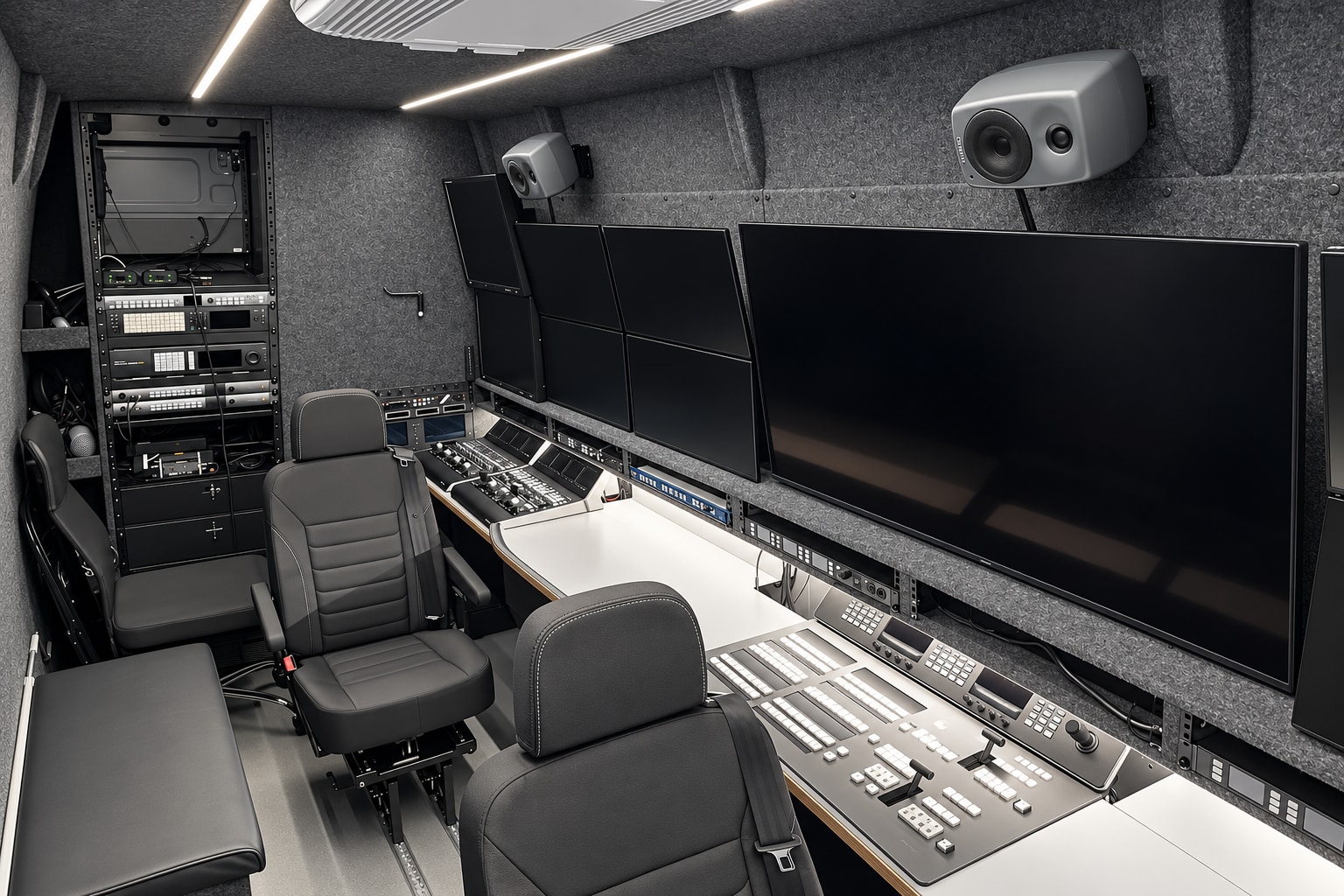
Controls, monitoring and equipment brought together.
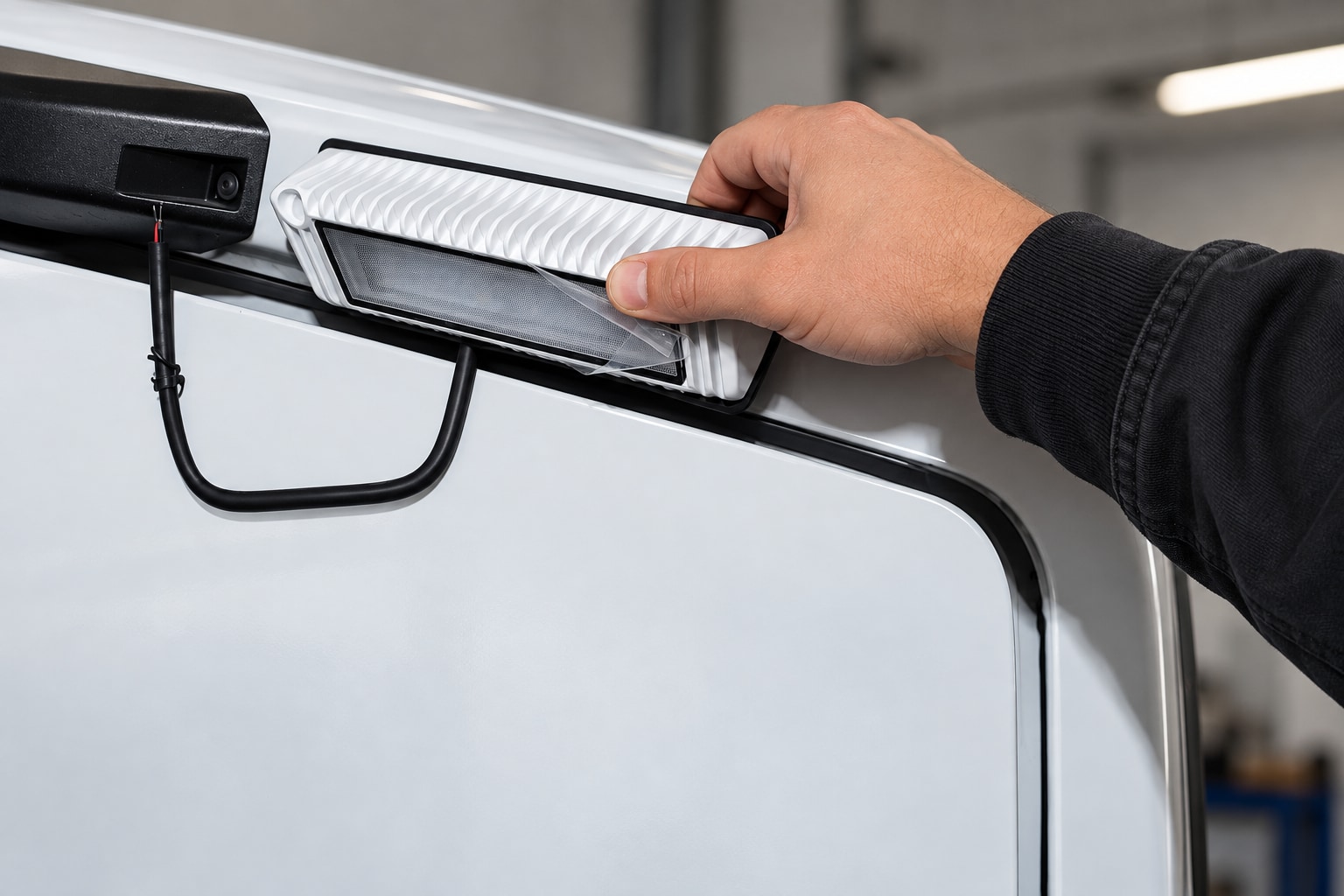
Practical lighting and careful work at the vehicle body.
Planning your own mobile production setup?
Talk to our teamFrom complete OB vans and studios to the infrastructure behind them, these are the systems we build, integrate, and support.

Complete mobile production environments, from control surfaces and monitor walls to racks, workflow, operator comfort, and practical operation on location.

Van conversions, roof systems, cooling, fit-out work, and the engineering changes that turn a vehicle into a proper production tool.

From arenas and concerts to sports venues, we build the technical side of live production so it stays dependable under real-world pressure.

Studios, galleries, multiview walls, camera control, and operator positions designed for day-to-day use and real production conditions.
Explore Studio DesignWe design and build television, corporate video and podcast studios. We bring the space, cameras, lighting, sound, LED screens and editing infrastructure together, so your team can focus on making content and your investment fits the work you actually do.
First, we understand what you will produce and how your team will work. Then we develop a 3D concept and a reasoned equipment proposal. Before you buy, you can see what you are getting and why you need it.
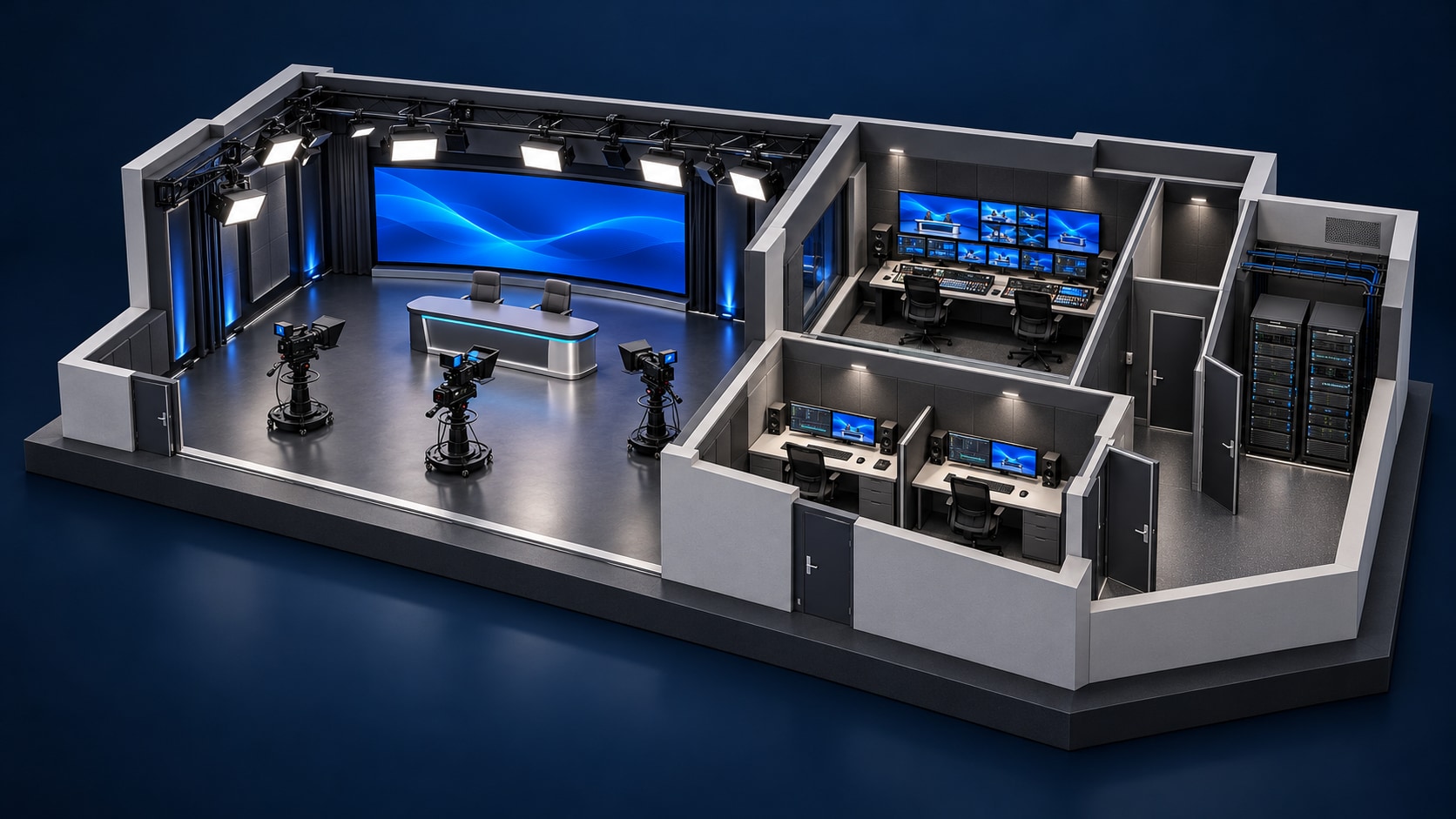
Our 3D design shows the shooting space, camera positions, lighting layout, control room and editing workstations. It makes it easier to judge whether there is enough room for the shots you want, the people, the equipment and clear circulation routes.
We also plan cable routes, power and network connections, equipment cooling requirements and maintenance access. If space is limited, we look for a practical solution rather than trying to fit everything in at any cost.
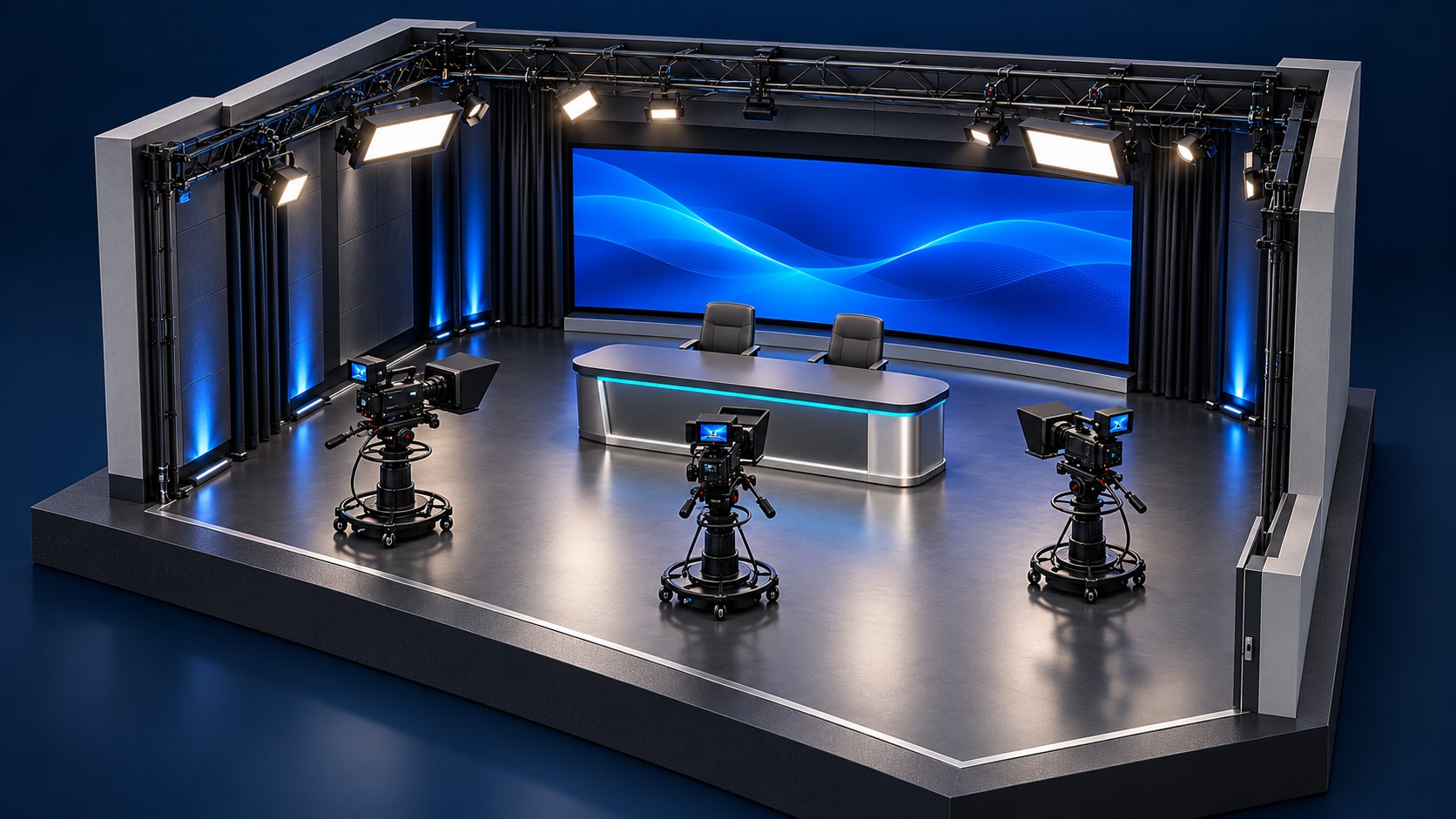
We select cameras and lenses around the room, the shots you need, the content format and the way your crew works. We design multicamera systems with vision mixing, recording, live streaming and crew communications to suit the project.
We also design, supply and install LED screen solutions for studio backgrounds. We match the screen to the cameras and lighting, considering pixel pitch, shooting distances and operating settings to reduce the risk of flicker, banding and moiré. We test the final combination in the intended shooting modes.
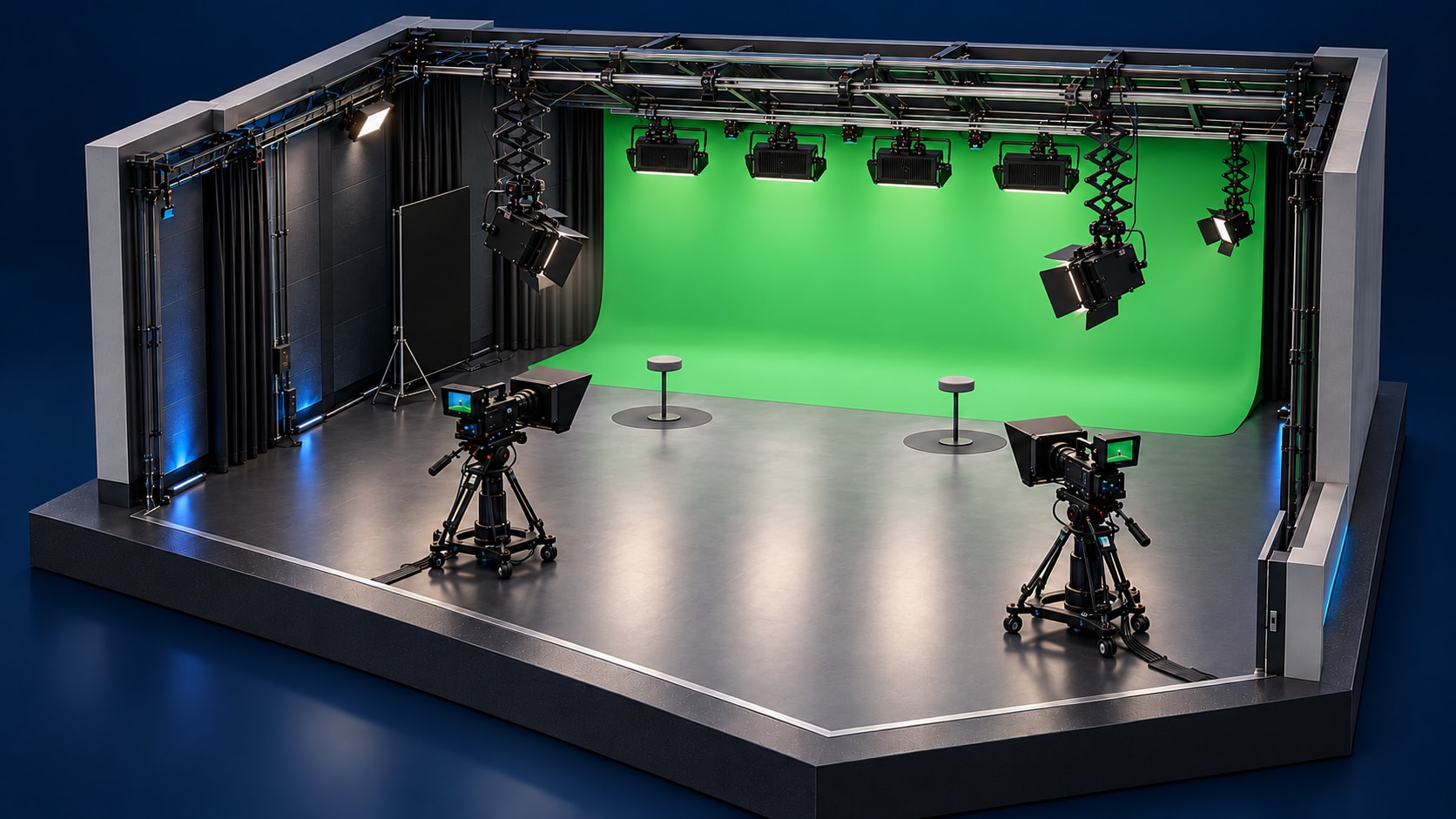
We plan lighting around people, camera positions and the set. We specify fixtures suited to filming, with appropriate mounting and control. The aim is natural skin tones and a result your team can repeat across different productions.
In a green-screen studio, we light the background and people separately. We allow for an evenly lit backdrop and enough separation to make background replacement easier and reduce green spill on the subjects. We assess the space this needs before you commit to a room or equipment.
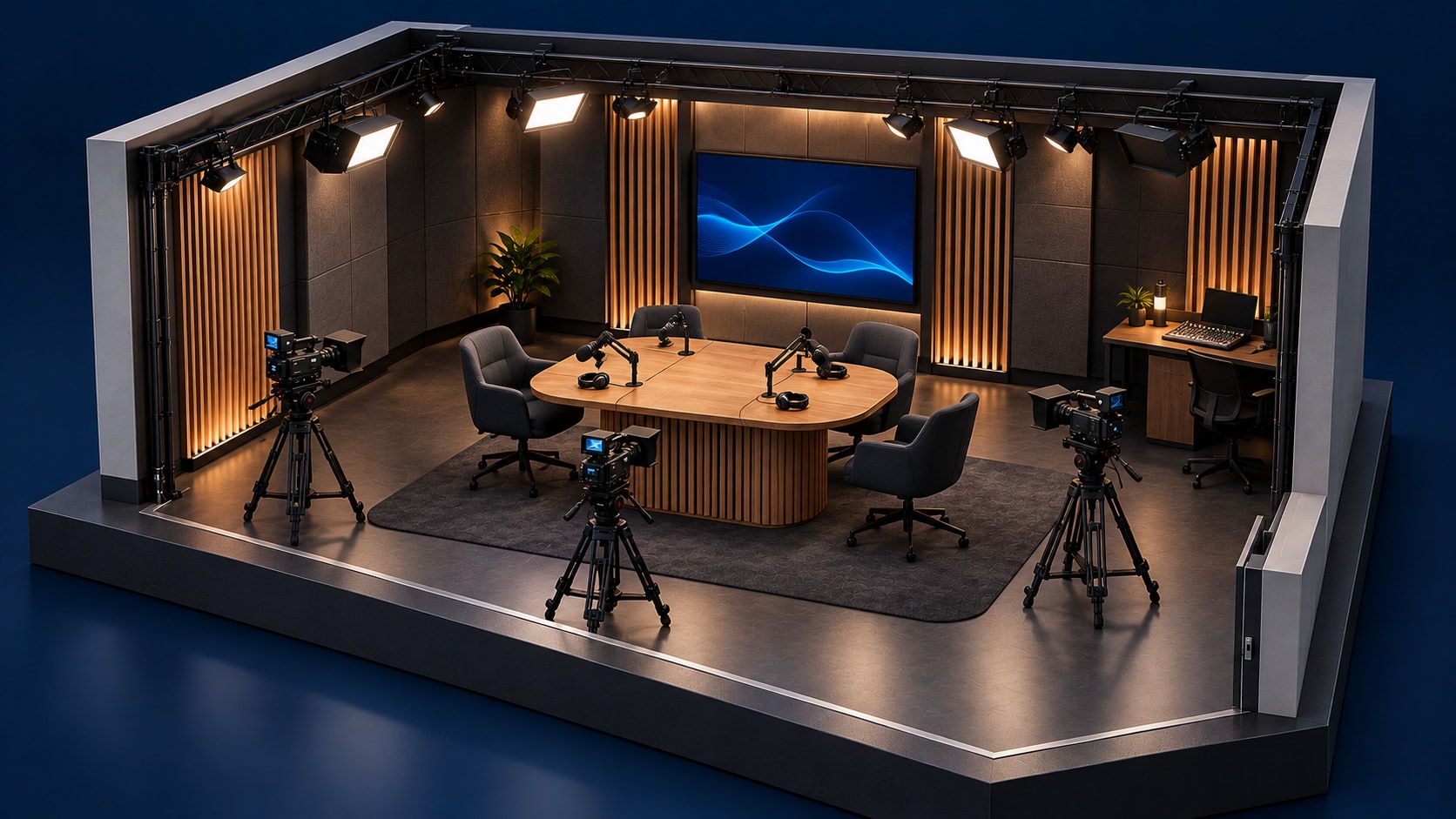
We create podcast and interview studios that work both for the people in the room and for the audience. We coordinate seating, cameras, microphones, headphone monitoring, lighting and recording. Control is matched to your team, from a simple recording position to a separate control room.
A good microphone cannot compensate for poor room acoustics. We assess reverberation, microphone placement, ventilation noise and sound from outside. Acoustic treatment and sound isolation solve different problems, so we consider them separately.
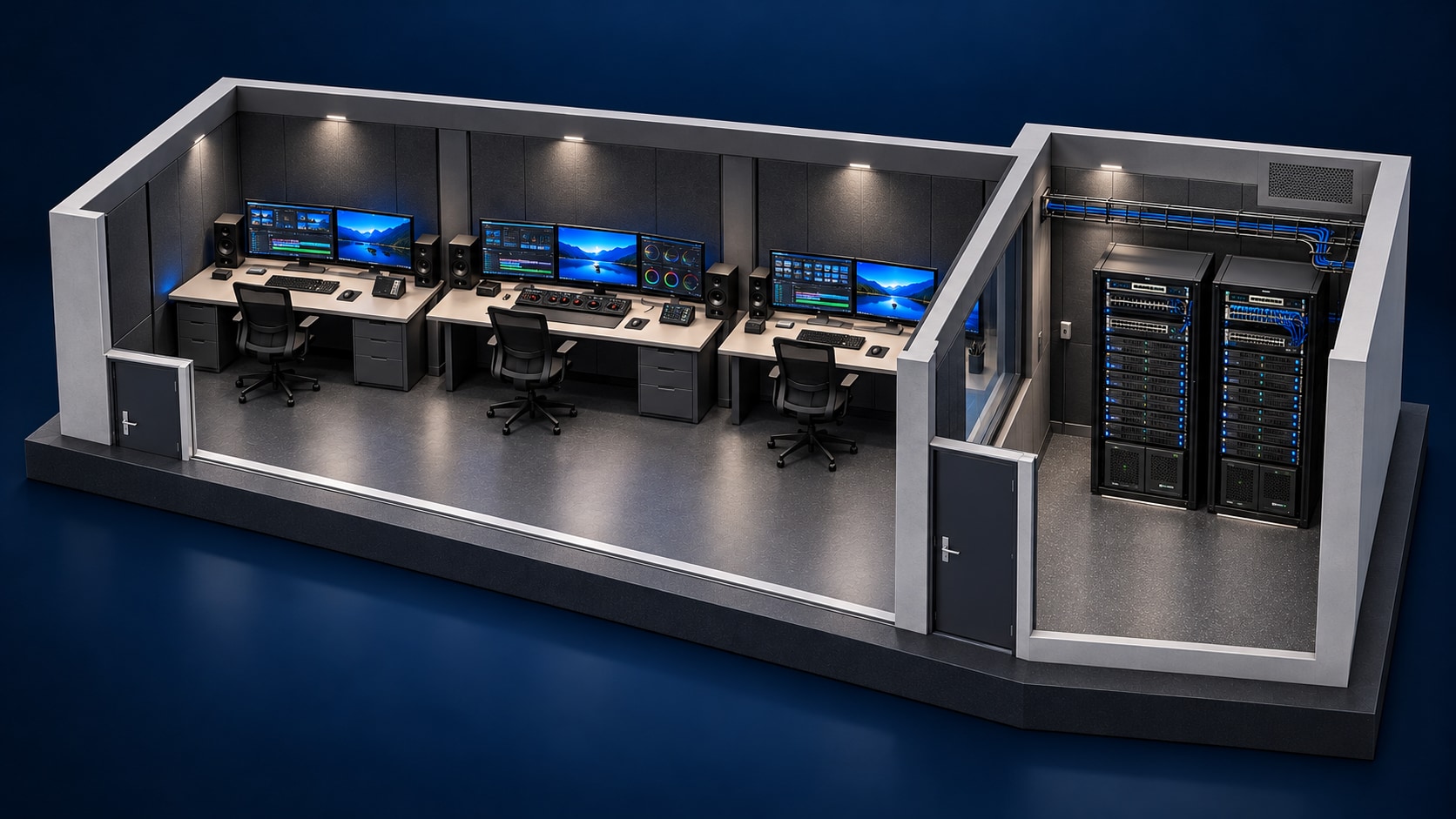
We also design dedicated editing workstations, shared media storage servers and the network connecting them. Computers, displays and storage are selected around your software, media formats, volume of material and the number of people working at the same time.
We size network and storage performance around the actual data load, not just the label ‘4K’. We plan access permissions, an appropriate collaboration workflow, backups and recovery. Protection against a disk failure is not a backup. Where the space allows, we keep noisy equipment separate from the people using it.
You can commission us for design alone, without buying equipment or installation from us. We can help establish exactly what you need and develop a design that your chosen supplier can implement.
We work through the content you will produce, team size, who will operate the system, and the space and equipment you already have. We assess budget, timing and future expansion. We compare options, explain their strengths and limitations, and agree a clear design brief with you.
Within the agreed scope, we produce a 3D layout, technical design and equipment specification. You get a clear basis for budgeting, comparing supplier proposals and installation, not simply a shopping list.
We explain which investments will make a practical difference and what can wait for a later phase. We assess your existing equipment and integrate it where it makes sense. We consider daily operation, maintenance and future expansion, not just the purchase price.
We agree the scope before work starts. Depending on the project, this can include:
The shooting space, equipment positions and team workstations, so you can assess the design before installation.
A coordinated equipment list, alternatives, budget and an explanation of what each part of the system does.
Connection diagrams, cable, network and mounting arrangements, power and cooling requirements, installation and system configuration.
Checks against agreed operating scenarios, documentation, team training and clear arrangements for ongoing support.
Content, space, team, budget and timing.
3D concept, technical planning and equipment selection.
Installation, connections and system configuration.
Checks against your workflow and practical team training.
For an initial discussion, a floor plan or room dimensions, a few photos and a short description of your content are enough. If you know your budget range and deadline, we will include them in the first proposal. If you have not chosen a space yet, we can help you understand what to look for.

Racks, patching, distribution, signal logic, and physical installation executed to a standard that keeps future maintenance straightforward.

Permanent and temporary cable routes for venues and facilities, planned with long-term serviceability and practical operation in mind.

Signal transport in motion for sports and field coverage where cable is not an option and the picture still has to arrive cleanly.

Practical podcast and compact audio rooms that sound warm, look inviting, and are easy for teams to use without fuss.

Acoustic control for rooms that need to sound professional, controlled, and ready for serious production.

Robotic heads, cranes, and movement systems for studios where precision and repeatability matter every day, not just on paper.

Proper studio camera builds, teleprompter alignment, and on-air detail work that keeps presenters comfortable and operators efficient.

Underwater and other non-standard camera placements for sports coverage when the production calls for something beyond the usual angle.
Planning a studio, OB van, live production setup, or infrastructure upgrade? Tell us what you need, where it will be used, and your timeline. We will help you work out a practical next step.